Head-to-Head: Asus Tuf Gaming A16 2025 vs Tp Link Archer Be9700 (Detailed Comparison)
Category: Laptops
Introduction
Comparing an entire laptop to a standalone router is an unconventional head-to-head, but it is a useful exercise for buyers configuring a modern gaming or productivity setup. The Asus TUF Gaming A16 (2025) represents the kind of mid-to-high-performance gaming laptop many people consider when they want portable horsepower. The TP-Link Archer Be9700 is a high-end home networking device built to deliver very low latency and high throughput across many devices. Rather than trying to crown a single “winner,” this article helps readers understand how each product solves different problems in a real-world environment and how they interact when used together.
This comparison will analyze core strengths and limitations, look at real-world use cases, outline pros and cons, present a clear comparison table, and provide a buying guide to help buyers decide whether to prioritize a laptop, a router, or both when building a balanced setup.
Product summaries
Asus TUF Gaming A16 (2025) — what it brings
The Asus TUF Gaming A16 lineup targets gamers and creators who want strong on-device compute in a reasonably portable package. Historically, TUF machines emphasize durability, thermal headroom, and value — offering discrete graphics, multi-core CPUs, and gaming-oriented displays. For 2025, buyers can reasonably expect a 16-inch display, robust cooling, and a balance between performance and price that favors sustained gaming and multitasking over ultra-thin portability.
TP‑Link Archer Be9700 — what it brings
The Archer Be9700 is positioned as a high-performance router for demanding homes: large families, multi-device households, streamers, and gamers who need consistent low-latency connections. It focuses on wireless capacity, modern Wi‑Fi features, and network management tools. In practice, such a device is designed to reduce contention on congested networks and provide stable throughput for simultaneous 4K streams, cloud gaming, and video conferencing.
Detailed analysis
Performance and primary purpose
Asus TUF A16: The laptop is a compute-first device. It processes games, renders video, and runs software locally. For gamers, the TUF offers the ability to run modern titles without streaming latency or reliance on an external network. For creators, it offers editing and encoding performance that a router cannot provide. Performance factors to weigh include CPU/GPU capability, thermal design, memory and storage speed, and display quality.
Archer Be9700: The router's “performance” is network-oriented: throughput, range, device capacity, and latency. It does not run games or render video, but it can be the difference between a stuttering cloud gaming session and a smooth one. For households where many devices share the same connection, the router's ability to prioritize traffic and maintain stable throughput under load becomes critical.
Real-world use cases
- Solo gamer who travels: A traveler benefits most from the TUF A16; local performance and portability matter more than home networking. A basic router or hotel Wi‑Fi will be a bottleneck for online multiplayer, but the laptop keeps gaming possible offline.
- Home streamer / content creator: Both products matter. The laptop provides the capture and encoding horsepower; the router ensures smooth uploads, low-latency interactions with viewers, and reliable simultaneous streaming from other home devices.
- Competitive online gamer in a multi-user household: The router becomes the priority — a high-capacity device like the Archer Be9700 reduces interruptions and unfair lag spikes stemming from other devices sharing the same Wi‑Fi.
- Work-from-home professional with occasional gaming: A balanced approach helps: the laptop for productivity and occasional gaming, the router for stable video calls and large file transfers across multiple devices.
- Small household with many smart devices: The router matters most—smart home devices, security cameras, phones, and TVs all compete for airtime. A modern router better handles device coordination and background traffic.
Connectivity and ecosystem
Connectivity is where these two products interact. The TUF A16's value is amplified when it connects to a robust home network. Modern gaming laptops include Wi‑Fi 6/6E (or newer), Ethernet ports or adapters, and multiple USB/USB‑C ports for peripherals. The Archer Be9700 aims to provide high-speed wireless links, multi‑gig Ethernet backhaul, and traffic prioritization to reduce jitter and packet loss.
Find top-rated Laptops & Computers products at great prices.
Shop Amazon →In practical terms, a gaming laptop connecting via a strong local Wi‑Fi 7 (or high-tier Wi‑Fi 6E) router or through wired Ethernet will experience lower ping and fewer frame drops in online play. For streamers, proper router Quality of Service (QoS) ensures outgoing streams remain stable even when other household members are downloading large files.
Portability, build and maintenance
The Asus TUF A16 emphasizes a balance between ruggedness and portability. It is designed to be transported to dorms, LAN events, or between work and home. Laptops require OS updates, driver maintenance, and periodic hardware upgrades (RAM/SSD replacement on many TUF models). Routers like the Archer Be9700 are stationary appliances: they require occasional firmware updates and placement optimization for coverage but no battery charging or on-person portability.
Value and upgrade path
Laptops are significant one-time investments with an expected usable life measured in years of compute utility. Users often consider CPU/GPU longevity, the ability to upgrade RAM or storage, and resale value. The router is a network infrastructure purchase expected to last multiple years, with occasional firmware feature improvements, but with no direct “upgradeable” compute for most households beyond replacing the device entirely. Budget allocation depends on whether compute or network performance is the recurring bottleneck.
Pros & Cons
Asus TUF Gaming A16 (2025)
- Pros:
- Strong on-device compute for gaming, content creation, and multitasking
- Portable 16-inch form factor suitable for travel and LAN events
- Durable chassis and serviceable components on many TUF models
- Higher refresh rate displays often available, improving competitive play
- Local performance avoids network-related latency for single-player or offline work
- Cons:
- Battery life typically limited under heavy load
- Thermals can constrain sustained high-end performance in thin chassis
- Heavier and bulkier than ultraportables
- On its own, does not address household network limitations
TP‑Link Archer Be9700
- Pros:
- Designed to handle many simultaneous devices with stable throughput
- Network features (QoS, device prioritization) help reduce latency for gaming and streaming
- Extends overall home network capacity, improving experience for all connected devices
- Stationary, low-maintenance once configured properly
- Cons:
- No compute capability — cannot replace a laptop for gaming/creation
- High-end routers are an extra expense for single-user homes where ISP equipment is sufficient
- Physical placement and interference can limit real-world performance; may require mesh or extenders for large homes
Comparison table
| Category | Asus TUF Gaming A16 (2025) | TP‑Link Archer Be9700 |
|---|---|---|
| Primary function | Portable compute device for gaming, productivity, content creation | Home networking device that routes and prioritizes traffic |
| Real-world impact | Determines frame rates, render times, and local responsiveness | Determines network latency, coverage, and concurrent device performance |
| Portability | High — designed for travel | Low — meant to be stationary |
| Upgradeability | Often user-upgradable RAM/SSD; GPU/CPU fixed | Non-upgradeable; replace device when newer features are needed |
| Maintenance | OS/driver updates, battery and thermal care | Firmware updates, placement optimization |
| When to prioritize | When device compute is the bottleneck (gaming, editing) | When many devices or network-sensitive apps degrade online experience |
| Typical buyer | Mobile gamer, student, content creator | Household with many devices, streamers, competitive gamers seeking stable home Wi‑Fi |
Buying guide: which one to choose (or buy both)
Buyers should start by identifying the primary pain point:
1. Is compute power the limiting factor?
If the current system struggles to run games at desired settings, has long render/export times for video, or performs poorly in multitasking, the laptop should take precedence. Prioritize the Asus TUF A16 when:
- Most tasks are performed locally and require CPU/GPU horsepower
- Portability is important (travel, commuting, campus life)
- The user wants an all-in-one device for work and play
2. Is the network the limiting factor?
If online games show frequent lag spikes but local hardware is adequate, video calls drop during household peak usage, or multiple 4K streams compete on the same connection, invest in the Archer Be9700. Prioritize the router when:

- Many devices share a single internet connection
- Online gaming or cloud gaming suffers from jitter and packet loss
- Streaming quality for remote meetings or content uploads is inconsistent
3. Balance: both are important
Most households benefit from investing in both: the laptop to handle local workloads and a strong router to ensure network-dependent tasks remain smooth. For example, a content creator who streams gameplay needs the TUF’s encoding power and the router’s ability to prioritize upload traffic to keep the live stream stable.
Find top-rated Laptops & Computers products at great prices.
View Offers →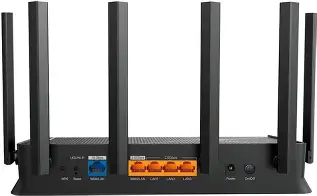
Key questions to ask before buying
- What is the primary use case: gaming, work, content creation, or mixed?
- How many devices will be regularly connected to the home network?
- Does the ISP plan offer sufficient bandwidth, or will a router alone not solve congestion caused by a slow internet plan?
- Is portability required, or will most use be stationary at a desk?
- Does the budget allow for both a good laptop and a robust router, or must one be prioritized?
Practical setup tips
For buyers who select both, consider the following to maximize value:
- Use wired Ethernet whenever possible for competitive gaming or streaming: a direct connection from the router to the laptop eliminates Wi‑Fi variability.
- Place the router centrally and high in the home to reduce interference and improve coverage; consider mesh extenders for large homes.
- Enable QoS or device prioritization on the router for the laptop when low latency is essential.
- Keep laptop drivers and firmware up to date; similarly, apply router firmware updates to benefit from security and performance improvements.
- For heavy cloud gaming or game streaming, ensure both a capable laptop for encoding and a router that can sustain upstream bandwidth simultaneously.
Price and value considerations
Price sensitivity will strongly influence decisions. Laptops are typically the larger single expense, where buyer choices include CPU/GPU configuration, display options, and RAM/storage sizes. Routers are a smaller line-item but can unlock better performance from existing devices and internet plans. Buyers should weigh the marginal benefit: upgrading a laptop yields immediate improvements in single-user productivity, while upgrading a router benefits everyone on the network.
One practical approach is staged investment: prioritize the device that removes the current bottleneck first, then plan the complementary purchase when the budget allows. For instance, purchase the laptop to resolve compute issues and later upgrade the network to support streaming and multiple users.
Conclusion
The Asus TUF Gaming A16 (2025) and the TP‑Link Archer Be9700 address fundamentally different but complementary needs. The TUF A16 delivers local compute power for gaming, creation, and mobility. The Archer Be9700 provides network capacity, stability, and modern features that preserve low-latency connections in busy households. Neither product replaces the other; instead, they play different roles in a healthy home setup.
For single users who need raw performance while on the go, the laptop is the priority. For multi-device homes, streamers, or competitive online players suffering from inconsistent Wi‑Fi, the router is often the better immediate investment. For those building a long-term gaming and streaming environment, investing in both — paired with wired connections for the most latency-sensitive tasks — delivers the best overall experience.
Ultimately, the right choice depends on the buyer's daily workflows, the number of connected devices, and where pain points appear: on the device itself or across the network. Understanding that distinction will guide a purchase that meaningfully improves day‑to‑day performance.