I Tested the Grell Oae1 for a Month: Here is My Verdict
The Grell Oae1 enters the crowded open-back headphone market with an unusual promise: a more speaker-like presentation achieved through unconventional driver positioning and a tuning philosophy that does not simply chase the usual audiophile targets. Designed by Axel Grell and released through the Drop collaboration, the Oae1 has attracted attention from headphone enthusiasts who want something different from the familiar patterns established by long-running reference models.
After a month of daily listening, the verdict is that the Grell Oae1 is genuinely interesting, often impressive, and definitely not for everyone. It is not the safest headphone in its class, nor the most neutral, nor the most forgiving in terms of fit and use case. What it does offer is a distinctive listening experience with a broad, spacious presentation that can sound uncannily open with the right recordings. For some buyers, that alone will make it memorable. For others, its tonal quirks and practical limitations will be enough to look elsewhere.
This review takes an editorial, real-world look at where the Oae1 succeeds, where it falls short, and who should seriously consider it.
What the Grell Oae1 Is Trying to Do
The Grell Oae1 is an open-back over-ear headphone built around a 40mm biocellulose dynamic driver. On paper, that may not sound unusual, but the design approach is what makes it stand out. Instead of placing the drivers in a conventional orientation close to the ear, the Oae1 positions them in a more forward, offset manner intended to interact differently with the listener’s outer ear. The goal is to create a wider, more natural image that feels less like sound beaming directly into the head and more like sound arriving from in front of the listener.
That ambition matters because many buyers shopping in this category care about three things above all else: soundstage, tonal balance, and comfort. The Oae1 clearly prioritizes the first of those. It is an enthusiast headphone designed for home listening, not commuting, office work, or travel. Its fully open design leaks sound heavily and offers essentially no isolation, so it should be treated as a personal listening tool for quiet environments.
First Impressions and Build Quality
Out of the box, the Grell Oae1 makes a stronger visual impression than many mid-priced audiophile headphones. It looks deliberate and engineered rather than decorative. The headband assembly and cup structure feel sturdy, and there is a certain industrial confidence to the overall design. It does not feel fragile, and that matters for buyers who worry that open-back audiophile gear can be too delicate for regular use.
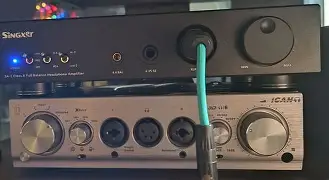
The included cable options are a welcome sign that the product was built for enthusiasts rather than general electronics-store shoppers. The supplied accessories feel practical, and the package does not come across as stripped down. The headphone itself is also substantial in the hand, though that solidity brings trade-offs in weight and long-session comfort.
During the month-long test period, the Oae1 held up well to routine desk use, repeated plugging and unplugging, and being moved between different listening setups. There were no issues with creaks, loose joints, or obvious wear on the pads. That does not guarantee long-term durability, of course, but the first impression is of a product that was made to be used seriously, not merely admired.
Comfort Over a Month
Comfort is one of the most complicated parts of the Oae1 experience. It is not a universally comfortable headphone in the way some classic open-back designs are. The headband support is decent, and the earpads are soft enough, but the overall fit can feel more assertive than some listeners may want. Depending on head shape, the clamping force may register as secure or slightly fatiguing.
In shorter sessions of one to two hours, comfort was acceptable. In longer sessions, especially during workdays that involved background listening, the Oae1 became more of a mixed bag. The pads can retain some warmth, and the physical presence of the headphone never quite disappears. Buyers who want a headphone they can forget they are wearing should pay attention to this point.
That said, comfort was not a deal-breaker. It simply never became one of the product’s standout strengths. For many buyers, that means the decision will come down to whether the sound makes the fit compromises worthwhile.
Sound Quality: The Main Event
Soundstage and Imaging
This is where the Grell Oae1 earns its reputation. Its standout quality is a large, airy, speaker-like presentation that feels intentionally different from more conventional open-back headphones. With live recordings, acoustic music, orchestral works, and well-produced jazz, the Oae1 can sound impressively spacious. Instruments and voices often feel less pinned to the sides of the head and more distributed in front of the listener.
That quality is not imaginary or marketing hype. It is noticeable. On the right material, the Oae1 produces a sense of spread and openness that many listeners will find addictive. Buyers who typically value imaging precision in gaming or layered placement in complex mixes may also appreciate how the headphone separates elements within a wide field.
Looking for the best Audio & Headphones deals on Amazon?
Browse Now →However, this presentation is not universally better; it is different. Some recordings benefit greatly, while others sound slightly unusual or diffuse compared with more traditional tunings. The Oae1 prioritizes spatial character over strict studio-style focus.
Bass Performance
The bass is one of the more debated aspects of the Oae1, and for good reason. It reaches low enough to keep modern music engaging and does not sound thin in the way some open-back designs can. There is more body and presence here than buyers may expect if they are coming from leaner reference headphones.
For electronic music, movie scores, indie rock, and pop with strong low-end foundations, this can be satisfying. The headphone sounds full and substantial rather than anaemic. But bass quality is not just about quantity. In some tracks, the low end can edge toward bloom rather than tight control. Listeners who prefer dry, highly disciplined bass may find the Oae1 a little loose or rounded.
In practical terms, that means the Oae1 is enjoyable for everyday listening but may not be the first choice for someone seeking textbook bass restraint for mixing or highly analytical work.
Midrange
The midrange is where the Oae1 becomes more polarizing. Vocals are generally present and intelligible, but they do not always have the intimate, locked-in center image that some buyers may expect from established reference models. Depending on the recording, the mids can feel natural and easygoing or slightly less immediate than ideal.
For podcasts, singer-songwriter material, and acoustic sessions, the Oae1 remains enjoyable, but it does not always place the human voice at the center of the experience with the same authority as a more mid-forward headphone. Buyers who live for vocal realism, speech clarity, or small ensemble intimacy may want to compare before committing.
Treble and Detail
The treble tuning is another area where personal taste matters. The Oae1 does not come across as aggressively bright, which will be good news for treble-sensitive listeners. It avoids the kind of brittle sharpness that can make longer listening sessions tiring. At the same time, it is not the last word in ultra-crisp detail retrieval or top-end sparkle.
Microdetail is present, but it is not always foregrounded in a way that makes the headphone feel relentlessly analytical. Some listeners will hear this as natural and fatigue-free. Others will interpret it as a slight softening of edge definition. In other words, the Oae1 leans more toward immersion and presentation than razor-edged forensic detail.
How It Performs in Real-World Use
Home Listening
This is the Oae1’s natural habitat. In a quiet room, connected to a good desktop DAC/amp or a capable portable source, it delivers a spacious and characterful performance that rewards focused listening. It is especially good for listeners who sit down in the evening and want a deliberate music session rather than mere background noise.
Work-from-Home Desk Use
The Oae1 can work for home-office listening, but with caveats. Since it is fully open, nearby people will hear what is playing, and external noise will remain audible. For a solo workspace, that may be fine. In a shared household or room, it is much less ideal. Comfort over very long workdays is also only average.
Gaming and Media
Because of its staging and openness, the Oae1 can be compelling for immersive single-player gaming and film soundtracks. Positional awareness and environmental cues benefit from the broad image. Competitive players may still prefer something more tightly focused, but for cinematic entertainment, the headphone has appeal.
Portable and Travel Use
This is not what the Oae1 is for. It leaks too much, isolates too little, and is too physically substantial to recommend as an everyday portable headphone. Buyers who need one headphone for everything should treat that as a serious limitation.
Discover deals on Audio & Headphones — updated daily.
Browse Now →Pros and Cons
Pros
- Distinctive, wide soundstage that can feel more speaker-like than many traditional headphones
- Engaging open-back presentation for acoustic, live, jazz, orchestral, and atmospheric recordings
- Solid build quality with a purposeful, enthusiast-focused design
- Fuller bass presence than many open-back rivals in the same broad segment
- Generally non-fatiguing treble that avoids harshness for many listeners
- Strong option for buyers seeking something genuinely different from conventional tuning targets
Cons
- Comfort is not class-leading, especially in long sessions
- Tonal balance can be polarizing, particularly in the mids and bass control
- Open-back design limits versatility for office, commute, and shared-space use
- Not the most neutral or analytical headphone for studio-minded listeners
- Requires taste alignment; buyers expecting a universally safe sound may be disappointed
- Large physical presence makes it less suitable as an all-purpose everyday headphone
Comparison Table
| Category | Grell Oae1 | Typical Neutral Open-Back Rival | What It Means for Buyers |
|---|---|---|---|
| Soundstage | Very spacious, intentionally speaker-like | Usually wide but more conventional | Great for immersive listening and live recordings |
| Bass | Full, present, sometimes a little rounded | Tighter and more restrained | Better for enjoyment than strict neutrality |
| Midrange | Natural but occasionally less intimate | Often more centered and direct | Vocal lovers may prefer a more traditional tuning |
| Treble | Smooth, not overly sharp | Can be crisper or more analytical | Good for listeners sensitive to brightness |
| Comfort | Acceptable, somewhat dependent on fit | Varies, but some rivals are easier over long sessions | Worth trying before buying if comfort is a priority |
| Use Case | Best at home in quiet spaces | Also mostly home-focused | Not suitable for commuting or noisy environments |
| Personality | Bold and unconventional | Safer and more predictable | Ideal for adventurous buyers, less so for cautious ones |
Who Should Buy the Grell Oae1?
The Oae1 makes the most sense for a buyer who already understands the trade-offs of open-back headphones and actively wants a product with its own identity. It is a strong fit for listeners who value presentation, atmosphere, and spatial realism over strict adherence to conventional reference tuning.
It is especially appealing for:
- Listeners who enjoy acoustic, jazz, classical, ambient, and live recordings
- Enthusiasts curious about alternative headphone design philosophies
- Home listeners with a quiet room and a decent source chain
- Buyers who already own a more neutral pair and want something complementary
It is less suitable for:
- People needing one headphone for commuting, travel, and work
- Buyers who want a safe, universally agreeable tuning
- Studio users prioritizing strict tonal accuracy and mix evaluation
- Listeners who are highly sensitive to clamping force or long-session comfort issues
Buying Guide: What to Consider Before Choosing the Oae1
1. Understand the Open-Back Trade-Off
The Oae1 is meant for private listening spaces. Anyone shopping for a headphone to use around family, in an office, or on public transport should look elsewhere. Open-back headphones create a spacious sound, but they do so by sacrificing privacy and isolation.
2. Know Whether You Want “Different” or “Reliable”
Some buyers truly want a headphone with a unique voice. Others say they do, but in practice they prefer a familiar tonal balance. The Oae1 is not the safest recommendation for blind buying. It is a better fit for someone who is actively attracted to the idea of a wider, more speaker-like presentation and is willing to accept some tonal individuality.
3. Match It to Listening Habits
If the majority of listening happens with vocal-centric music, spoken word, or reference-style studio tracks, the Oae1 may not be the first choice. If listening tends to focus on immersive albums, instrumental recordings, cinematic scores, or layered live performances, it becomes far more persuasive.
4. Consider Comfort Honestly
Spec sheets rarely tell the full story with comfort. Buyers who wear headphones for four to eight hours a day should think carefully about clamping force, pad heat, and total weight. The Oae1 is manageable, but it is not the benchmark for effortless wear.
5. Think About System Pairing
Like many enthusiast headphones, the Oae1 benefits from being used with a competent source. It does not require exotic equipment to sound good, but it does deserve better than a weak or noisy output. Buyers who already have a solid DAC/amp stack or a capable dedicated player will likely get more from it.
Final Verdict
After a month of use, the Grell Oae1 stands out as a thoughtful, unconventional open-back headphone with a real point of view. Its best qualities are not subtle: a broad soundstage, an immersive sense of space, and a presentation that often feels more speaker-inspired than headphone-bound. Those strengths make it memorable in a market where many products chase the same target curve and end up sounding more similar than different.
Its weaknesses are just as important to acknowledge. Comfort is only moderate, tonal balance will divide opinion, and its open design sharply limits where and how it can be used. This is not the obvious recommendation for every buyer. It is the recommendation for the buyer who wants a capable, well-built, home-listening headphone that dares to do something different.
In short, the month-long verdict is that the Grell Oae1 is worth serious attention for adventurous listeners. It is not a universal crowd-pleaser, but it is one of the more interesting audio products in its segment, and in the right setup with the right music, it can be genuinely rewarding.