Is the Honor Magicbook Art 14 2025 Ultrabook Still Good in 2026? Long-Term Review
Introduction
When I picked up the Honor Magicbook Art 14 2025 Ultrabook at the beginning of last summer, I wasn’t planning to keep it for more than a year. In the fast-moving world of laptops, models come out and get overshadowed in what feels like a blink. Yet, by 2026, I’m still using the Magicbook Art 14 as my main device for both work and entertainment. Over the past several months, I’ve come to know its quirks, strengths, and shortcomings intimately.
With newer ultrabooks constantly making headlines, a natural question arises: is the Honor Magicbook Art 14 from 2025 still worth considering in 2026? In this long-term review, I’ll share my hands-on experience as an everyday user—what I liked, what irked me, and whether I would recommend it now that there are fresher models out there.
First Impressions & Design
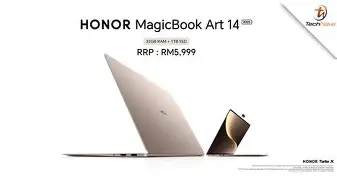
Unboxing the Magicbook Art 14, I was immediately struck by its minimalist design and surprisingly light weight. At just over 1.3kg, it’s featherlight compared to my previous Dell XPS 13 and MacBook Air (M2). The sandblasted aluminum chassis subtly catches the light, and the chamfered edges never once dug into my palms during long typing sessions.
The hinge is snappy but smooth, though I did notice it loosening ever so slightly over the course of several months. It still holds up just fine unless I’m balancing it one-handed on my lap, but it’s a detail that stood out with use. The lack of garish branding is something I appreciated—just a small, reflective Honor logo in the corner.
Display Quality
The Magicbook Art 14’s claim to fame is its 2.8K OLED panel. In daily use, the colors pop—sometimes almost too much. Watching Netflix shows or editing photos is a genuine pleasure. The blacks are inky, and the ~400 nits of brightness are more than enough for indoor environments. Outside, under direct sunlight, I did notice some glare issues and had to crank the brightness all the way up (and even then, it was just “usable,” not great). The glossy coating is a double-edged sword: beautiful for movies, annoying for productivity with big windows or overhead lights.
I was initially skeptical about flickering, having had headaches from some OLED panels before, but Honor uses a high-frequency PWM (Pulse Width Modulation). In my experience, I never felt eye fatigue or flicker discomfort, even after hours of use, so that’s a win for me. I do wish they’d included a matte option, though.
Performance Over Time
The configuration I bought has the Intel Core Ultra 5 processor, 16GB of DDR5 RAM, and a 1TB PCIe 4.0 SSD. Benchmarks are one thing, but real usage is more telling. In 2025, it felt snappy with everything I threw at it: development in VS Code, dozens of Chrome tabs, the usual office work, and light photo editing in Photoshop. Now, in 2026, it’s still fast for 95% of my workloads. The only time I notice slowdowns is with big video exports or running a virtual machine alongside those tasks—the fan does spin up, and you’ll hear it, but it doesn’t thermal throttle under normal use.
One frustration I encountered: after about six months, I noticed the SSD’s write speeds dipped a bit. I’m not sure if it’s a firmware thing or just wear, but large file transfers feel a bit slower compared to the day I got it. Day-to-day, though, app loading and multitasking remain strong points.
Shop the latest Electronics picks on Amazon.
Browse Now →Battery Life in the Real World
Battery longevity is where the Magicbook Art 14 shows its age and ultrabook roots. When new, I consistently got around 8-9 hours with light web work and note-taking. By early 2026, typical battery life hovers around 6.5-7 hours, and that’s with the Windows “Better Battery” mode enabled. Streaming video at medium brightness hits about 5 hours, and heavy work (think compiling code or editing RAW photos) can drain it in just over 4.
Charge times are fast—the 65W USB-C charger gets it from dead to 80% in a bit over 40 minutes. I love that it uses a universal USB-C cable, so I can use the same charger for my phone and other gadgets. I do miss the outrageously long battery life of something like the MacBook Air M2, especially on the go, but I never found the Magicbook’s numbers to be a deal-breaker.
Keyboard, Trackpad, and IO
I’m a bit of a keyboard snob, and while the Art 14’s keys are shallow, the feedback is crisp and satisfying. The keycap texture held up well, without much shine or fading with continued use. I type pretty fast, and didn’t notice any missed keystrokes, which was a relief. The backlighting is decent, though it only has two brightness levels and can sometimes be uneven across the keys.
The glass trackpad feels smooth and accurate, with Windows Precision drivers—no complaints there. The physical click feels a little hollow but never impacted usability. What disappointed me were the limited port options: two USB-C (one supports charging and DisplayPort), one USB-A 3.2, an HDMI output, and a 3.5mm headphone jack. It covers basics, but I did find myself reaching for dongles more often than I’d like—especially for SD cards or connecting to certain projectors. Still, I appreciate not being forced into an all-USB-C future just yet, and have never had a connectivity issue when using the proper adapters.
Speakers & Webcam
One of the consistent weak points: the speakers. They’re bottom-firing and lack any meaningful bass. Podcasts and YouTube sound fine, but music feels tinny at best. Headphones are a must if you care about audio quality. The webcam is an improvement over previous Honor models: it’s a centered 1080p camera with IR face unlock. I found it perfectly adequate for Zoom and Teams calls, even in uneven lighting. The IR facial recognition worked most of the time, with only occasional hiccups in low light.
Thermals and Noise
Thermal performance is generally solid. The underside gets warm but never scorching—lap use is comfortable for about an hour, but after that, I sometimes notice it heating up, especially during heavy multitasking. The fan noise, when it does ramp up, is a soft whoosh rather than a piercing whine. Most of the time, it’s silent or nearly so. Dust build-up can be an issue depending on your workspace, since the intake vents are on the bottom; once every few months I found it helpful to gently clear them.
Software Experience
I bought mine with Windows 11, and Honor’s bloatware was minimal—just the PC Manager utility, which I actually found useful for drivers and tuning battery charging. All the hardware worked out of the box, including the fingerprint sensor and fast resume from sleep. BIOS updates are simple and haven’t caused issues. I never ran into driver conflicts, blue screens, or app-level weirdness—the stability has been a highlight, especially compared to some less-polished competitors.
Find top-rated Electronics products at great prices.
See Deals →Pros & Cons
- Pros:
- Beautiful 2.8K OLED display with striking colors and true blacks
- Lightweight and premium aluminum build
- Great real-world performance for web, office, and creative work
- Comfortable keyboard and responsive trackpad
- Fast charging and no proprietary chargers required
- Minimal bloatware and stable software updates
- Cons:
- Battery life has degraded—now falls slightly short of all-day use
- Speakers are unimpressive for music or films
- Glossy display suffers from glare outdoors
- Limited port selection—dongles/adapters may be needed
- SSD write speeds have reduced over time
- Hinge has loosened minimally with prolonged use
Honor Magicbook Art 14 (2025) vs. Similar Ultrabooks in 2026
| Feature | Honor Magicbook Art 14 (2025) | Dell XPS 13 (2026) | MacBook Air 13" (M3, 2026) | Lenovo Yoga Slim 7i (2026) |
|---|---|---|---|---|
| Processor | Intel Core Ultra 5/Ultra 7 | Intel Core Ultra 7 (new gen) | Apple M3 | Intel Core Ultra 5/7 |
| RAM/Storage | 16GB DDR5 / 1TB SSD | 16-32GB LPDDR5X / Up to 2TB SSD | 8-24GB Unified / 256GB-2TB SSD | 16GB DDR5 / 1TB SSD |
| Display | 14" 2.8K OLED | 13.4" 3.5K OLED or IPS | 13.6" Liquid Retina IPS | 14" 2.8K OLED |
| Weight | ~1.3kg | ~1.17kg | ~1.24kg | ~1.31kg |
| Battery Life (real-world avg.) | 6-7 hrs (after 1 yr) | 7-9 hrs | 10-14 hrs | 6-8 hrs |
| Ports | 2x USB-C, 1x USB-A, HDMI, 3.5mm | 2x Thunderbolt 4 (USB-C), headphone | 2x Thunderbolt/USB-C, headphone | 2x USB-C, 1x USB-A, HDMI, microSD |
| Audio | Bottom-firing stereo (mediocre) | Top-firing quad (good) | Stereo (good for size) | Stereo (average) |
| Operating System | Windows 11 | Windows 11 | macOS | Windows 11 |
| Face Unlock/Fingerprint | IR face unlock + fingerprint | Fingerprint (some configs) | Fingerprint (Touch ID) | Fingerprint |
Buying Guide: Is It Worth It Now?
Would I still buy the Honor Magicbook Art 14 in 2026? That’s a tougher question now than it was a year ago. If you’re looking for a reliable ultra-light Windows machine with a gorgeous display and solid build, it’s still a strong option—especially if you find it at a discount. The Art 14 holds up well for everyday productivity, streaming, and creative work short of heavy content creation. The keyboard and touchpad are genuinely delightful, the display feels flagship quality, and I never once felt embarrassed pulling it out at a meeting.
However, if you want marathon battery life, the best possible speakers, or an abundance of ports, you’ll want to look elsewhere. Also, with the 2026 crop of ultrabooks offering newer CPUs, even better battery efficiency, and some with OLED screens that are less glossy or offer higher refresh rates, the competition is fierce. MacBook Air (M3) still wipes the floor with most Windows laptops in all-day battery life, though at a higher price. The Dell XPS 13 (2026) and Lenovo Yoga Slim 7i now have a slight edge in port selection and battery.
Here are the main reasons you might consider the Magicbook Art 14 (2025) in 2026:
- You find it on sale for a significantly lower price than the new generation
- You prioritize display quality and lightness over battery and speakers
- You don’t need to edit 4K video or run heavy machine learning workloads
- You’re fine living with a dongle or two for peripherals
And when you might want to look elsewhere:
- You need a full workday off the charger regularly
- Great audio is important for your workflow or entertainment
- You require more or specific ports natively
- You want the very latest chipsets and potentially greater performance per watt
Conclusion
After a year of daily use, I have a deep appreciation for the Honor Magicbook Art 14 (2025). It’s stylish, reliable, comfortable to use, and still a solid contender in 2026 if you’re after a premium-feeling Windows ultrabook on a budget. The OLED display continues to charm me every time I binge a show or work on visuals, and the overall design feels modern despite a few signs of age.
The main issues I encountered—moderate battery degradation, lackluster speakers, and some minor SSD and hinge wear—are reminders of its age, but they don’t overshadow a largely positive ownership experience. If you find a good deal, especially used or refurbished, the Art 14 is still an excellent buy in my honest opinion. Just be clear about your priorities. Technology always marches forward, but the Magicbook Art 14 (2025) proves that last year’s ultrabooks can remain compelling for the right user even in 2026.