Rival 3 Wireless Gen 2 First Look: Unboxing and Impressions
Introduction
The Rival 3 Wireless Gen 2 arrives as SteelSeries' answer to gamers and everyday users who want a reliable, dual-mode wireless mouse without the premium price tag of flagship models. This first-look review focuses on unboxing, build and design impressions, performance testing, battery and connectivity behaviour, and how the Rival 3 Wireless Gen 2 stacks up for different real-world use cases. The goal is to give a clear, practical assessment for buyers who care about accuracy, latency, comfort, and long battery life.
Unboxing and First Impressions
Out of the box, the presentation is straightforward and functional. The package typically includes the mouse, a 2.4 GHz USB receiver (USB-A dongle), a quick-start guide, warranty documentation and, depending on the regional bundle, a pre-installed AAA battery. The unboxing experience prioritizes compact packaging and quick accessibility rather than premium extras.
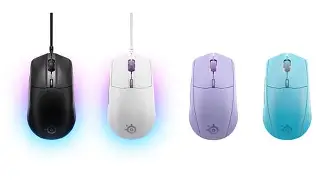
Initial handling reveals a medium-sized shell with a shape that favours claw and fingertip grips. The left and right primary buttons have a subtly scooped profile, and the sides are lightly textured for grip. The mouse does not chase ultra-light trends — it is designed for endurance and practicality rather than being featherweight.
Design and Build Quality
The Rival 3 Wireless Gen 2 keeps a familiar aesthetic from the Rival family: clean lines, modest RGB (or in some variants a pared back appearance), and a focus on durability. The casing uses durable plastic with a matte finish that resists fingerprints without feeling cheap. Tolerances are tight; there is little to no creaking or panel flex when the mouse is handled normally.
Button feel is an important part of the first impression. The primary switches are tactile, with a crisp actuation and a short travel appropriate for both gaming and productivity. Side buttons are positioned for easy thumb access without being obtrusive. The scroll wheel is precise with defined steps for notched scrolling; it’s neither the quietest nor the loudest wheel encountered but performs predictably for weapon switching and long-document navigation alike.
For gliding, the Rival 3 Wireless Gen 2 uses 100% PTFE feet that offer smooth, low-friction movement across most mousepads. The mouse supports 1–2 AAA batteries; using a single battery reduces weight slightly while two provide maximum runtime.
Performance and Sensor
Performance centres on the TrueMove Air optical sensor partnership and specs aimed at high accuracy and reliability. The sensor supports adjustable sensitivity up to 18,000 DPI, with native tracking designed to be 1:1 (pixel-perfect) across the sensitivity range. Other key metrics include a high polling rate and ratings that support swift motion: fast top speeds (measured in hundreds of inches per second) and high acceleration tolerance.
In practical terms, pointer movement is smooth and linear with negligible jitter for common desk surfaces. Low-latency 2.4 GHz mode provides responsive tracking suited to competitive play, while Bluetooth mode allows easy pairing across phones, tablets and secondary machines for casual browsing and office tasks.
Discover deals on Electronics — updated daily.
See Deals →During testing in both fast-paced shooter scenarios and slower, high-precision editing, the Rival 3 Wireless Gen 2 remained consistent. Micro-adjustments felt predictable, and the sensor did not introduce noticeable smoothing or filtering that would affect precision aiming or pixel-level work in image editing software.
Latency and Wireless Modes
One of the Rival 3 Wireless Gen 2’s strengths is its dual wireless approach. The 2.4 GHz connection using the included dongle targets minimal latency for gaming, while Bluetooth provides a battery-friendly, multi-device option. Switching between modes is quick and reliable, and the device preserves settings across reconnections.
For players who demand the fastest response, the 2.4 GHz mode is the go-to. It reduces end-to-end click-to-action time and is less prone to interference when the receiver is left close to the mouse (using a USB extension or front-panel USB port). Bluetooth is excellent for productivity-focused sessions where absolute lowest latency is not required and battery life is more important.
Battery Life and Power Options
Battery life is a central selling point. The Rival 3 Wireless Gen 2 is optimized for long runtimes: extended hours on both 2.4 GHz and Bluetooth modes. Exact figures vary by testing methodology and whether one or two AAA cells are used, but users can expect many days or even weeks of typical mixed use before swapping batteries if using a single rechargeable cell and Bluetooth. Using two fresh alkaline cells increases runtime significantly and is convenient for long tournament weekends or travel without recharging options.
SteelSeries’ design choice to use AAA batteries instead of a built-in rechargeable pack trades off convenience for long-term flexibility. Rechargeable AAA cells provide a middle ground for eco-conscious users; keeping a spare set in a bag is an easy contingency plan that many competitive players prefer over a dead internal battery on a crucial day.
Software and Customization
The Rival 3 Wireless Gen 2 is supported by SteelSeries’ GG software suite. Through the application, users can adjust DPI steps, polling rate, button mapping, polling behaviour and lighting where applicable. The software also allows profile saving to the cloud or local storage so users can carry sensitivity, macro and button configurations across systems.
For power users, the software enables fine-grained DPI adjustment in small increments, and assignment of complex macros to side buttons. For the average buyer, the out-of-the-box experience is sensible — preconfigured DPI steps and comfortable default acceleration and smoothing settings make the mouse immediately usable.
Find top-rated Electronics products at great prices.
View Offers →Real-World Use Cases
The Rival 3 Wireless Gen 2 targets several distinct user groups:
- Competitive and casual gamers: Those who need reliable 1:1 tracking, low-latency wireless, and robust click durability. The 2.4 GHz mode and tactile switches suit twitch-based shooters and MOBA play.
- Productivity and hybrid workers: Users working across a laptop and tablet benefit from Bluetooth mode for quick switching plus long battery life for travel days and office use without frequent charging.
- Content creators and editors: The precise sensor is accurate enough for fine cursor movements in photo or video editing, though users who need ultra-high DPI for very large multi-monitor setups should verify settings in their workflow.
- Travelers and students: Sturdy construction and long runtime make the Rival 3 Wireless Gen 2 a sensible companion for those who move between locations frequently.
Buyers typically care about comfort over long sessions, click reliability, battery life and cross-device compatibility. The Rival 3 Wireless Gen 2 addresses these concerns with a balanced feature set that works well across these scenarios.
Pros & Cons
- Pros:
- Accurate TrueMove Air sensor with up to 18,000 DPI and consistent 1:1 tracking
- Dual wireless modes: low-latency 2.4 GHz and battery-friendly Bluetooth
- Long battery life, flexible use of one or two AAA cells
- Solid build quality and comfortable medium-sized shape for many grip styles
- Easy-to-use software with meaningful customization options
- Durable switches rated for many millions of clicks
- Cons:
- Heavier than some ultralight wireless alternatives when two batteries are installed
- Lacks some premium features such as an integrated rechargeable battery or advanced scroll wheel mechanics
- No major ergonomic breakthroughs — shape is conservative rather than specialized
- Some buyers may prefer a USB receiver with a dongle hub or braided cable for wired fallback (not included)
Comparison
The following table compares the Rival 3 Wireless Gen 2 to two common reference points: its wired Rival 3 sibling and a popular compact wireless alternative. This should help buyers see trade-offs at a glance. Values are representative of typical specifications and intended as a buying-oriented comparison rather than exhaustive technical measurement.
| Feature | Rival 3 Wireless Gen 2 | Rival 3 Wired (Gen 2) | Compact Wireless Alternative |
|---|---|---|---|
| Sensor | TrueMove Air (optical) | TrueMove (wired-grade) | High-performance optical (vendor varies) |
| Max DPI | Up to 18,000 | Up to 18,000 | Typically 12,000–20,000 |
| Wireless Modes | 2.4 GHz + Bluetooth | Wired only | 2.4 GHz + Bluetooth (some models) |
| Power | 1–2 AAA batteries | USB powered | Built-in rechargeable |
| Weight | ~95–106g (depending on batteries) | ~77–85g (wired, no batteries) | Often 60–90g (ultralight variants lighter) |
| Primary Use | Gaming + productivity (balanced) | Gaming (cost-effective wired) | Competitive gaming (lightweight focus) |
| Customization Software | SteelSeries GG | SteelSeries GG | Varies by brand |
Buying Guide: Who Should Consider the Rival 3 Wireless Gen 2?
Choosing a mouse is a personal decision that depends on grip style, use case, portability needs and feature priorities. The following guide outlines which buyers will find the Rival 3 Wireless Gen 2 a particularly good match and what to check before purchasing.
Recommended for
- Budget-conscious gamers who want wireless performance without premium-tier pricing. The combination of a competitive sensor and a low-latency wireless option covers most gaming needs.
- Hybrid users who switch between work devices and gaming setups; Bluetooth makes pairing to multiple devices seamless.
- Travelers and remote workers who value long battery life and the ability to carry spare AAA cells instead of depending on a charging cable or cradle.
- People who prefer predictable, tactile clicks for long sessions — the switch durability and feel are good for extended use.
Consider alternatives if
- Lightweight competitive performance is the top priority. If minimal weight (<70g) is essential, candidates designed specifically for ultralight performance will be a better fit.
- Integrated rechargeable battery and USB-C charging are non-negotiable. The AAA battery approach offers flexibility, but some prefer built-in batteries for convenience.
- Ergonomic specialization is required (e.g., large ergonomic right-hand only shapes or vertical mice) — the Rival 3’s shape is fairly neutral and medium-sized.
What to check before buying
- Grip fit: Compare the mouse’s dimensions to the user’s hand and grip style. The Rival 3 is well-suited to medium hands and claw/fingertip grips.
- Battery strategy: Decide whether to use rechargeable NiMH AAA cells or disposables. Rechargeables lower long-term cost and environmental impact but require a charger.
- Ports and dongle placement: If using a laptop, ensure the USB receiver can be placed close to the mouse for optimal 2.4 GHz performance; a USB extension adapter is a small accessory that can help.
- Software expectations: Confirm that the SteelSeries GG features required (macros, DPI steps, profile storage) meet the user’s needs.
Conclusion
The Rival 3 Wireless Gen 2 is a thoughtful, well-rounded wireless mouse that balances accuracy, battery life and practical features. For buyers who prioritize consistent tracking, long battery life and dual wireless versatility, it represents a compelling option. It does not aim to be the lightest or flashiest mouse on the market; instead, it emphasizes dependable everyday performance across gaming and productivity tasks.
Ultimately, the Rival 3 Wireless Gen 2 will appeal to users who want a no-nonsense wireless experience and the flexibility to move between devices without frequent recharging. It is especially attractive for those who prefer the predictable convenience of replaceable batteries and a proven sensor in a comfortable, mid-sized package.