Should You Buy the Orochi V2 in 2026? A Deep Dive
Introduction
I've been using the Orochi V2 for several months now — I bought mine late in 2024 and have carried it between home, office, and travel through 2025 into 2026. After that time I feel comfortable sharing what it really feels like to live with this compact wireless mouse day-to-day. This article is my honest, hands-on account: what I liked, what annoyed me, and who I think should (or shouldn't) buy one in 2026.
Quick context
When I decided to buy the Orochi V2, I wanted a small, portable mouse that could handle both work and light gaming without being a burden in my bag. I prioritized battery life, wireless reliability, and a shape that works with my claw/grip hybrid. I also wanted something that felt robust enough to use daily rather than a disposable travel gadget. After months of mixed use — spreadsheets and code, image editing, a handful of late-night gaming sessions, and frequent plane travel — I can say how it holds up.
Design and ergonomics
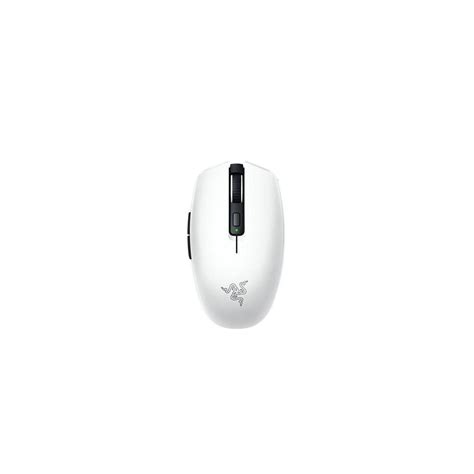
In my experience the Orochi V2 nails the “travelable but usable” balance. It’s noticeably smaller than full-size mice, which is exactly what I wanted: it slides into a laptop sleeve beside a charger and doesn’t add bulk. My hands are medium-sized and I naturally use a claw/grip hybrid; the Orochi V2 fits that grip well. I found the body comfortable for sessions of 2–4 hours, but for marathon gaming or long design days I missed a fuller palm rest — that’s expected with any compact mouse.
What I appreciated: the sides have a lightly textured finish that stops the mouse from getting slippery when my palms warmed up on long sessions. The main buttons are crisp without being hair-trigger; they give a satisfying click that never felt mushy even after months of daily use.
What bothered me: there’s a slight lightweight hollow feeling if you pick the mouse up and flex it in certain areas. It never affected performance, but it’s noticeable if you handle the mouse like a product inspector. Also, the side buttons are a touch small — they work fine for thumb presses but won’t suit anyone who prefers large, easily hit side buttons for rapid macros.
Performance: tracking, latency, and the scroll wheel
For general productivity the tracking has been rock solid. I used the Orochi V2 on a variety of surfaces — a clean desk, a textured travel tray, and a cheap hotel nightstand — and the sensor kept up without jitter or skipping. Gaming performance was pleasantly competent. I did a number of casual and competitive matches and did not notice input lag that would interfere with gameplay at non-professional levels.
One thing I found was that the mouse’s wireless mode matters: the low-latency 2.4GHz connection (using the included dongle) felt snappier than Bluetooth for fast-paced sessions. Bluetooth is great for switching between multiple devices — I used it with my laptop and tablet with quick pairing — but for twitchy, precision inputs I always reverted to the dongle.
The scroll wheel is a mixed bag: it’s tactile and accurate for navigating documents, but the detents are a little louder than I expected. In quiet environments the click-feedback can be distracting. It’s not a functional issue, but if you work in libraries or shared spaces you might notice it.
Discover deals on Electronics — updated daily.
See Deals →Battery life and charging
Battery life was one of the main reasons I bought the Orochi V2, and it mostly delivered. In everyday mixed use I got multiple weeks per charge; in low-activity travel mode it stretched even longer. Recharging is straightforward — I charged it with the cable that came in the box and never ran into awkward battery drops mid-day. I did notice that heavy gaming sessions eat through the battery faster when using the higher-performance wireless mode, which is expected.
After months of weekly charging cycles my unit’s battery health hasn’t shown meaningful degradation. That said, long-term battery life will vary depending on how aggressively you use the 2.4GHz mode versus Bluetooth and whether you lean on high polling rates for gaming.
Software and customization
I used the accompanying configuration software to tweak DPI, button assignments, and a few other settings. On a Windows machine the software worked well enough for basic personalization — I could change sensitivity steps and rebind side buttons. In my experience the software felt a bit bloated for what it does, and I ran into a couple of small bugs: a saved profile would sometimes fail to load on boot and needed a manual trigger. On macOS the software is more limited and on Linux it's essentially non-existent; if you rely heavily on OS-level customization outside Windows, expect friction.
That said, the ability to store a small number of onboard profiles means I could switch machines without losing my preferred DPI — that was genuinely useful when hopping between my desktop and laptop while traveling.
Durability and build quality after months of use
After several months of daily use my Orochi V2 shows normal wear: minor rub at the back where my palm rests, and a little dust in the grooves around the scroll wheel. Functionally it remains solid — buttons, sensor, and connectivity worked as on day one. I did not experience double-click issues or failing switches, which I appreciate because some small mice can have flaky buttons after heavy use.
My worry about the slightly hollow-feeling shell hasn’t turned into a real problem; it didn’t crack or warp despite being jostled in a bag with chargers and a hard-sided case. If you're rough on gear, the Orochi V2 isn’t the tankiest mouse out there, but it held up well under normal travel and daily carry.
Real-world use cases I tested
- Workday productivity: Switching between browser tabs, spreadsheets, and design apps was effortless. The smaller size made long hand movements less tiring across multiple screens.
- Travel and commuting: I liked that it fits into a laptop sleeve and wakes quickly. Bluetooth pairing with my tablet was convenient on flights when I didn’t want to use the dongle.
- Gaming: It’s capable for casual and semi-competitive play. I wouldn’t call it a tournament mouse — for pro-level esports I’d pick a larger ultralight — but for most gamers it’s more than adequate.
- Content creation: For photo editing and light video work the sensor is precise. For long DAW sessions where hand comfort matters, the compact shape required me to take more frequent breaks.
Pros & Cons
- Pros
- Excellent portability — small, light, and convenient to carry.
- Reliable wireless performance on 2.4GHz; Bluetooth works well for multi-device use.
- Long battery life in real-world mixed use.
- Onboard profile storage is handy for switching devices.
- Comfortable for claw and fingertip grips for medium-length sessions.
- Cons
- Not ideal for larger-handed users or those who prefer a full palm rest.
- Side buttons are small and can be awkward for heavy side-button users.
- Minor shell flex and a slightly hollow feel to the body.
- Scroll wheel detents are a bit loud for quiet environments.
- Customization software is Windows-centric and can be finicky at times.
How it compares (at a glance)
| Feature | Orochi V2 (my experience) | Compact travel mice (typical) |
|---|---|---|
| Portability | Excellent — small footprint, easy to pack | Generally similar; some are smaller but less comfortable for long use |
| Wireless options | Both Bluetooth and low-latency dongle; easy switching | Varies — some only offer one mode or less seamless switching |
| Battery life | Multiple weeks in mixed use; shorter under heavy gaming | Ranges widely; some ultra-compact mice sacrifice battery for size |
| Comfort for long sessions | Good for medium sessions; not for full-day heavy palm use | Full-size ultralights beat it for marathon comfort |
| Customization | Onboard profiles helpful; software works best on Windows | Some competitors offer better cross-platform tools |
Who should buy the Orochi V2 in 2026?
In my experience, the Orochi V2 is still a smart buy in 2026 if your priorities match the following:
- You want a genuinely portable mouse that you can use for both work and play without carrying a full-size peripheral.
- You switch between multiple devices and value Bluetooth for convenience but still want the option of a low-latency dongle for gaming.
- You prefer a smaller form factor and are comfortable with claw or fingertip grips.
- You value long battery life and onboard profile storage.
Conversely, don’t buy it if you:
Shop the latest Electronics picks on Amazon.
Shop Amazon →- Are a palm-grip user with large hands and need a deep ergonomic rest.
- Require large side buttons for heavy macro use or MMOs.
- Need Windows-free, feature-complete customization — the software is weakest outside Windows.
Buying guide: what to check before you buy
Here are the practical things I checked and would recommend you check too before pulling the trigger:
- Try the size in person if possible. Compact mice are very personal — if you can, hold one in a store to confirm the shape suits your grip.
- Decide if you need the dongle. If you’re mostly on a single laptop and rarely play competitive games, Bluetooth may be enough. If you play fast FPS titles, plan to use the dongle for lower latency.
- Consider your primary OS. If you rely heavily on macOS or Linux for deep customization of macros or RGB, verify the vendor’s software support for those platforms.
- Check warranty and support. I had good luck with hardware durability, but having a reliable warranty matters if you travel a lot with your mouse.
- Test the scroll wheel and side buttons if you can. I liked the clicks, but some people will find the scroll noisy or the side buttons too fiddly.
- Think about weight preference. If you love ultralight mice under 60 grams, compare weights; the Orochi V2 is light but not the absolute lightest.
Price and value — is it worth it in 2026?
Prices have shifted across the accessory market since I bought mine, but fundamentally value comes down to how you intend to use it. For someone like me — commuting with a laptop, occasional gaming, and wanting one mouse for most scenarios — the Orochi V2 still feels like a good value. It replaces two mice in my bag: a chunky home mouse and a tiny travel-only unit that I previously used. If you only need a travel mouse for rare use, there are cheaper options; but for everyday carry and real-world durability, paying a modest premium seems justified.
Final thoughts and conclusion
After several months of regular use, what I found was that the Orochi V2 is a dependable, well-balanced compact mouse that excels at portability without entirely sacrificing comfort or performance. I was pleasantly surprised by how often I reached for it instead of my full-sized home mouse; that says a lot about how comfortable and capable it is.
That said, it's not perfect. The small side buttons, slightly hollow shell feel, and software quirks are real disappointments I noticed in daily use. None of those were dealbreakers for me, but they may be for you depending on your priorities.
In short: if you value portability, multi-device wireless convenience, decent battery life, and a mouse that does both work and casual gaming competently — the Orochi V2 is still worth considering in 2026. If your top priorities are marathon comfort for big-handed palm grips, oversized side buttons, or perfect cross-platform software, look elsewhere.
That's my personal, long-term take after living with the Orochi V2 for months. I used it across work projects, travel, and gaming, and it earned a permanent place in my bag — with a few caveats that made me pair it with a larger mouse for the heaviest sessions. If you want a compact, everyday wireless mouse that actually performs, I think it’s a solid choice; just make sure its size and button layout fit your hands and habits before you buy.